
I recently stumbled upon an intriguing research article that delves into the relationship between physical activity and cognitive decline. If you’re like me and always curious about how lifestyle choices can affect our well-being, this one’s for you!
The Research Unveiled: [Link to the Pubmed Article]
The study, titled “Physical Activity and Cognitive Decline: A Longitudinal Study on the Elderly,” explores the intricate connection between staying active and maintaining cognitive health as we age. It’s not just about lifting weights or running marathons – there’s a lot more to it, and the findings are nothing short of fascinating.
Understanding the Basics
The researchers conducted a longitudinal study, observing a group of elderly individuals over time. Longitudinal studies are like time-lapse photography for science, allowing us to see changes and patterns unfold. In this case, they sought to uncover how engaging in physical activity could influence cognitive decline in the aging population.
The Takeaways
Let’s break down the key insights from the research:
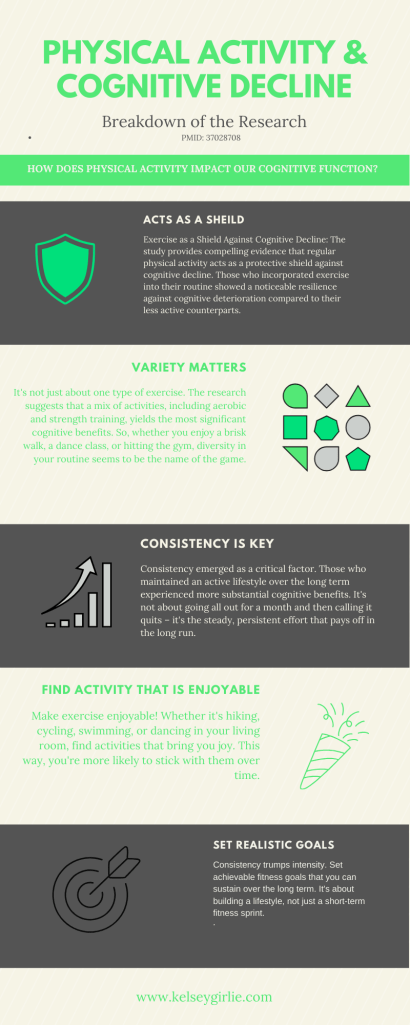
1. Exercise as a Shield Against Cognitive Decline: The study provides compelling evidence that regular physical activity acts as a protective shield against cognitive decline. Those who incorporated exercise into their routine showed a noticeable resilience against cognitive deterioration compared to their less active counterparts.
2. Variety Matters: It’s not just about one type of exercise. The research suggests that a mix of activities, including aerobic and strength training, yields the most significant cognitive benefits. So, whether you enjoy a brisk walk, a dance class, or hitting the gym, diversity in your routine seems to be the name of the game.
3. Consistency is Key: Consistency emerged as a critical factor. Those who maintained an active lifestyle over the long term experienced more substantial cognitive benefits. It’s not about going all out for a month and then calling it quits – it’s the steady, persistent effort that pays off in the long run.
Applying the Findings
Now, how can we apply these insights to our lives? Here are some practical tips:
1. Find Activities You Enjoy: Make exercise enjoyable! Whether it’s hiking, cycling, swimming, or dancing in your living room, find activities that bring you joy. This way, you’re more likely to stick with them over time.
2. Mix It Up: Don’t stick to just one type of exercise. Engage in a variety of activities to challenge your body and mind. It could be as simple as incorporating a mix of cardio, strength training, and flexibility exercises into your routine.
3. Set Realistic Goals: Consistency trumps intensity. Set achievable fitness goals that you can sustain over the long term. It’s about building a lifestyle, not just a short-term fitness sprint.

Final Thoughts
As we navigate the journey of aging, staying active emerges not only as a key player in physical health but also as a guardian of cognitive well-being. The research serves as a reminder that the choices we make today can significantly impact our tomorrow.
Feel free to dive into the full research article here for a deeper understanding. Until next time, keep moving, keep exploring, and embrace the journey to a healthier and sharper you!
 Basic Body Solutions
Leave a comment